
Every autumn, the same question lands in millions of inboxes and search bars across Europe: when do I need to change to winter tyres, and is it actually the law where I live? It’s a fair question, because the honest answer genuinely depends on which country you’re in, and sometimes on which road you’re driving. The rules range from strict fixed-date obligations, to flexible “only when it’s wintry” requirements, to no legal requirement at all. This guide explains how winter tyres work, how to read the markings, how the different kinds of rules across Europe are structured, and how to get your car ready for the changeover whatever the regulations where you drive. One important note before we start: because the specific obligations and dates differ by country and can change from year to year, always confirm the current rules for your own country, and for anywhere you plan to drive, before you travel. We’ve kept the legal specifics general on purpose and point you to verify them, but everything else here, the tyres, the markings, the seasonal swap and the kit, is practical and works the same wherever you happen to be.
Winter tyres vs all-season: what changes below 7°C
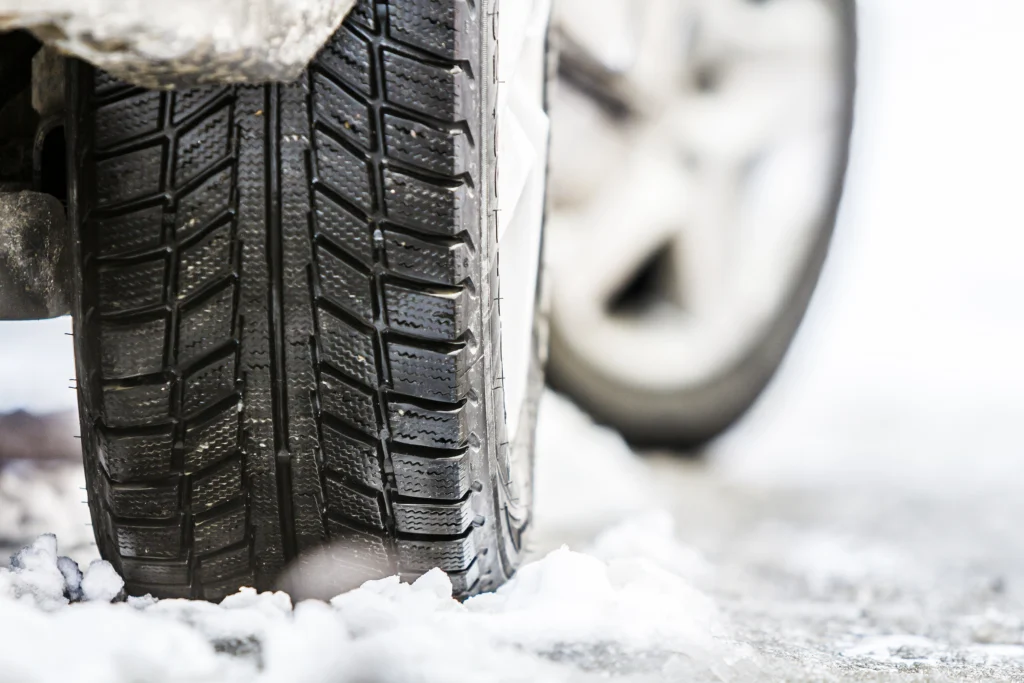
The number that matters is around 7°C. Below roughly that temperature, the rubber compound in a standard summer tyre begins to harden and lose grip even on a dry road, so stopping distances lengthen and cornering grip falls away well before there’s any snow or ice involved. Winter tyres use a softer compound that stays flexible in the cold, together with deeper tread and fine zig-zag cuts called sipes that bite into snow and clear away slush and water. That’s why they’re really cold-weather tyres rather than just snow tyres: they’re doing useful work on every cold, wet morning, not only on the handful of genuinely snowy days a year. All-season (or all-weather) tyres are the middle path, a compromise compound and tread pattern that copes with mild winters and year-round use without a seasonal swap, which suits drivers in milder regions or those covering lower mileage. Which option makes sense for you comes down to your climate, your annual mileage and how much real winter weather you actually face. As a sense of scale, the grip difference on a cold, wet road is not marginal: on summer tyres in near-freezing conditions, both braking and cornering take noticeably longer and further than most drivers expect, which is why the 7°C guideline matters even in regions that rarely see snow. If your winters are genuinely mild and your mileage is low, a good all-season tyre carrying the proper winter marking can be the pragmatic single-set answer; if you regularly face cold, snow or mountain roads, a dedicated winter set still wins clearly. The honest rule of thumb is to match your tyres to the worst conditions you’ll regularly meet, not the average ones.
How the rules work across Europe
There is no single European rule, instead, each country takes one of three broad approaches, and it helps to know which kind you’re dealing with. The first is a fixed mandatory period: winter or all-season tyres are required between set calendar dates, regardless of the weather on the day. The second is a situational or conditional rule: winter tyres are required only when wintry conditions are actually present, snow, ice or slush on the road, so the obligation effectively switches on and off with the weather. The third is no general legal requirement at all, where winter tyres are recommended rather than mandated, sometimes combined with chain requirements on specific, signed mountain roads. Many countries also set a minimum tread depth for winter use and recognise specific tyre markings, covered in the next section. The table below lists the markets to map for a pan-European audience, but the specific period, trigger and obligation for each one must be completed with current, legally-verified information for the season in question, because these are precisely the details that change from year to year. For a driver, the practical takeaway is simple: find out which of the three types applies where you live, note the date or the condition that triggers it, and treat anywhere you’re travelling to as a separate check, a journey that crosses a border can move you from one regime to another without any warning at the roadside.
How to read the markings: M+S and 3PMSF
When you’re buying or checking tyres, two markings matter most. “M+S” (or “M&S”, for Mud and Snow) is an older, self-declared marking that a manufacturer can apply based on the tread pattern; it indicates some mud-and-snow capability but isn’t backed by a standardised performance test. The 3PMSF symbol, the three-peak mountain with a snowflake inside it, sometimes called the Alpine symbol, is the one to look for: it’s awarded only after a tyre passes a standardised snow-traction test, so it’s the reliable sign of genuine winter performance. Across Europe the 3PMSF marking is increasingly treated as the real standard for winter and all-season tyres, while M+S on its own counts as weaker evidence. You’ll find both markings moulded into the tyre sidewall. If you run all-season tyres and want them to count as properly winter-capable, check that they actually carry the 3PMSF snowflake and not just the M+S letters. It’s worth checking two other things on the sidewall while you’re there. One is tread depth, because worn winter tyres lose much of their advantage, many drivers treat around 4mm as the practical limit for winter use, well above the legal summer minimum. The other is the tyre’s age, shown by a four-digit DOT code giving the week and year of manufacture; rubber hardens with time even on a tyre that looks barely used, so a very old set may underperform regardless of tread.
Storing and swapping wheels the right way
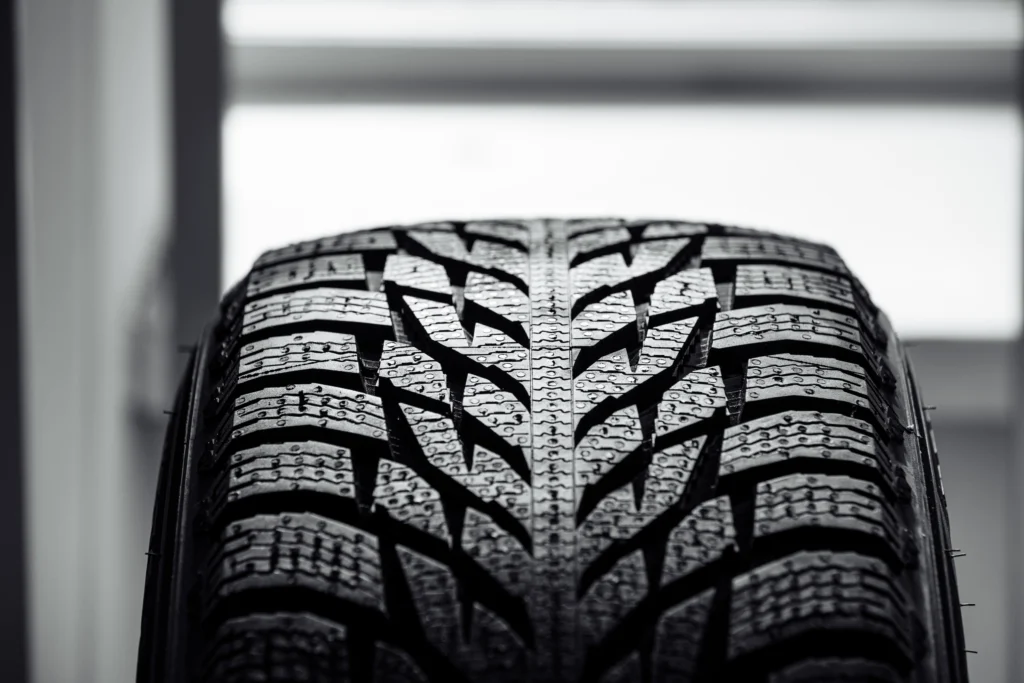
If you switch between summer and winter sets, how you store the off-season wheels makes a real difference to how long they last. Clean them first to remove brake dust and road salt, mark which corner each one came from so you can rotate correctly next time, and check the tread and overall condition while they’re off the car. Store them somewhere cool, dry and out of direct sunlight, which degrades rubber over time. Tyres mounted on wheels are best stacked flat or hung up; unmounted tyres are best stood upright. A set of wheel covers or tyre bags keeps them clean and makes them far nicer to handle, and a tyre pressure gauge lets you set the correct pressure when you refit them, remember that stored tyres lose a little pressure, so always check before the first drive. If you’re swapping the wheels yourself, tighten the bolts to the correct torque in a star pattern, and re-check them after the first short drive. If storing wheels at home isn’t practical, many tyre centres offer a seasonal “tyre hotel” service that stores, cleans and inspects your off-season set for you, convenient, and it keeps the garage clear.
What to keep in the car for the transition period
The changeover weeks are unpredictable, mild one morning, frosty the next, so it’s worth carrying a small transition kit before your winter setup is fully sorted. A pair of warm gloves and a hi-vis vest earn their place in the boot year-round for a reason: changing a wheel or checking tyres on a cold roadside is a great deal safer and more bearable with both to hand. Add a torch, a tyre pressure gauge and an ice scraper as the mornings start to turn. And if your route ever takes you somewhere higher or colder than usual during this period, it’s worth knowing in advance whether chains might be required there, rather than discovering it at a closed mountain pass with nowhere to turn around. A couple of minutes checking the forecast and the route the night before a cold-weather trip removes almost all of that risk, and lets you pack the right extras rather than guessing on the doorstep.
When chains come into play
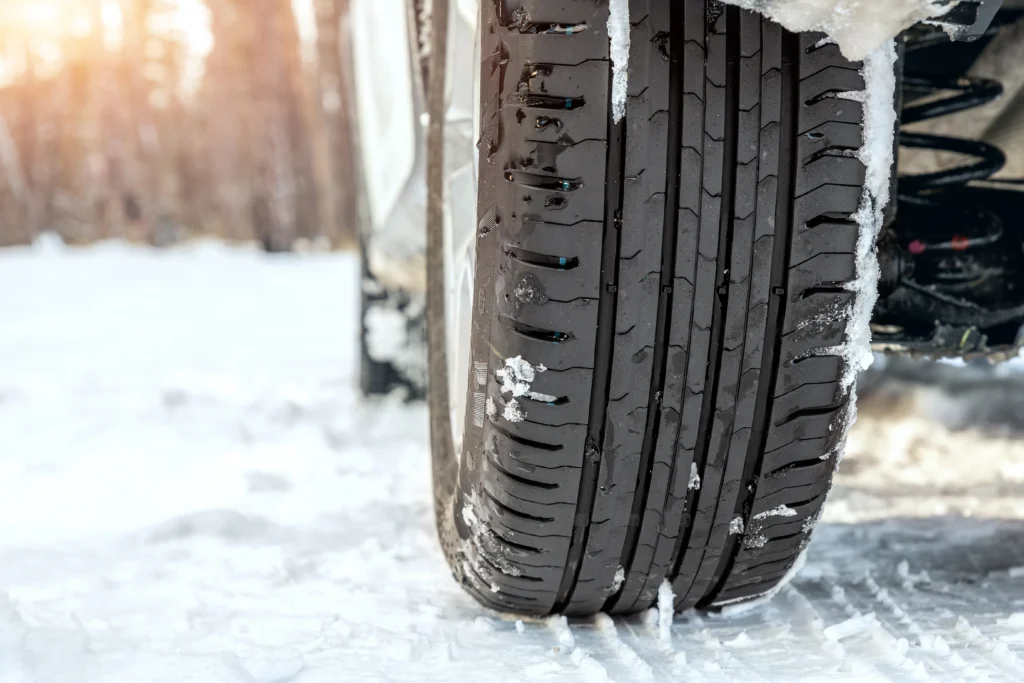
On some higher or more remote routes, snow chains may be required even if you already have winter tyres fitted, typically indicated by road signs at the start of the affected stretch and enforced in genuinely wintry conditions. Chains give maximum grip in deep snow and on the steep, icy climbs that tyres alone can’t handle, which is why mountain and Alpine routes so often call for them. The key is to carry them before you need them, and to have practised fitting them at least once in the dry, because a snowy verge in failing light is a miserable place to learn. A set of snow chains matched to your tyre size, kept in the boot for any trip into the mountains, turns a potential dead end into a brief stop by the road. As with everything in this guide, whether and where chains are mandatory varies, so always check the requirements for your specific route before you set off. It’s also worth knowing the alternatives: alongside traditional metal link chains, there are textile snow socks that slip over the tyre quickly and suit occasional, lighter use, though they’re less durable than chains for repeated deep snow. Whichever you go for, match them to your exact tyre size and make sure the type you’ve chosen is actually accepted on the routes you plan to use.
A pre-winter readiness checklist
Pulling it all together, here’s the readiness routine for the changeover, whatever your local rules turn out to be. Decide on your setup, winter tyres, all-season tyres, or summer tyres plus chains for occasional trips, based on your climate and mileage. Check the date or trigger that applies where you live, and book any wheel swap early, before the garages fill up with everyone else who left it late. Inspect tread depth and overall condition on whichever set you’re fitting. Set the correct cold pressures once they’re on. Stock the car with the cold-weather basics, scraper, gloves, hi-vis vest, torch and a pressure gauge, and add chains if your routes call for them. Finally, confirm the current rules for your own country and for any cross-border trips you have planned. Do all that, and the first real cold snap finds you ready rather than scrambling. None of these steps is difficult on its own; the value is in doing them together and in good time, so nothing important is left to the morning the temperature finally drops.
Ready for the cold, whatever the rules
Winter tyre season looks complicated from the outside, but it really comes down to a handful of clear decisions: the right tyres for your climate, the correct markings, a tidy seasonal swap, and the current rules for wherever you drive. Get those sorted in October and the rest of the winter largely takes care of itself. Whatever your setup, get changeover-ready with Bottari Europe’s winter range, from snow chains and wheel storage to the tyre tools that make the swap quick and painless.

 Spain
 Portugal
 Poland
 Romania
 Hungary
 Baltic