
Winter has a way of finding the gaps in your preparation at the worst possible moment, a dead battery on the coldest morning of the year, a flat tyre on a dark verge, a sudden snarl-up that leaves you sitting still in the cold. None of it is likely on any given day, but across a whole winter the odds quietly add up, and the difference between a minor inconvenience and a genuinely bad afternoon usually comes down to what’s in your boot. A winter car emergency kit isn’t about preparing for disaster; it’s a small, one-time bit of sense that turns most cold-weather surprises into five-minute problems. Here’s exactly what to keep in the car, item by item. Think of it less as a grab-bag and more as five small kits in one, a safety kit, a power kit, an ice kit, a tyre kit and a comfort kit, each covering a different thing that cold weather likes to break.
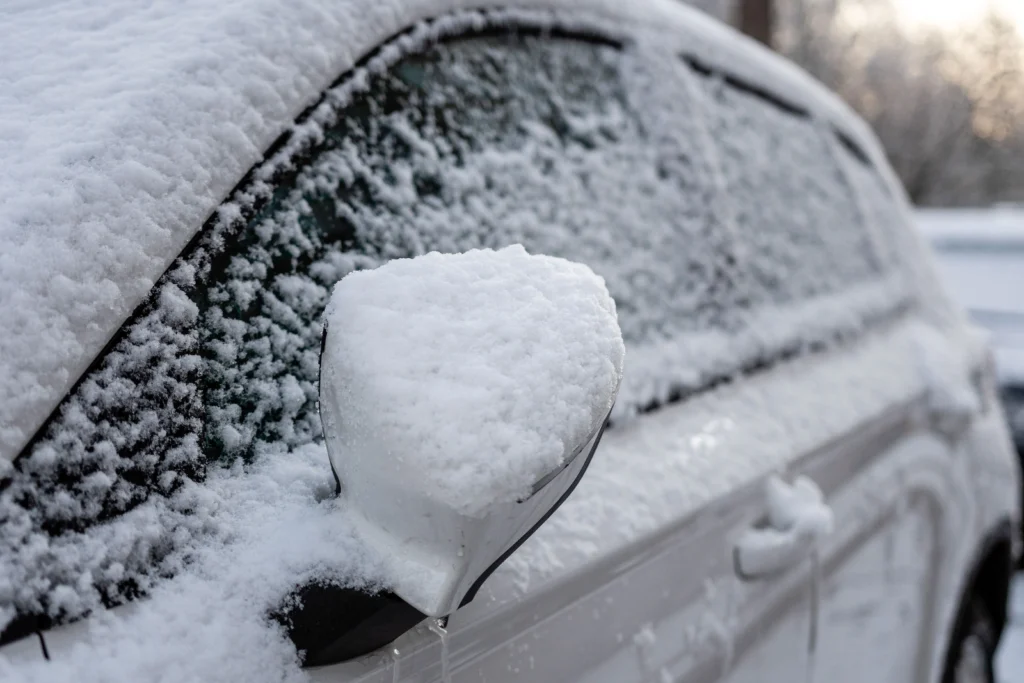
Why a winter kit matters more than you think
TIn summer, a breakdown is mostly an inconvenience. In winter, the same wait at the roadside is cold, dark and potentially risky, and help can take longer to reach you in bad weather. A good kit does two jobs at once: it helps you fix or manage small problems yourself, a flat battery, a soft tyre, an iced-up windscreen, so they never become a call-out at all, and it keeps you safe and reasonably comfortable if you do end up having to wait. The best part is that it’s genuinely one-and-done: assemble it once this autumn, keep it in the boot, and it’s simply there on every cold morning without another thought. Build it around the real winter risks, power, ice, tyres, visibility and the cold itself, and you’ve covered the overwhelming majority of what actually goes wrong. And unlike a lot of winter prep, it asks nothing of you after the first afternoon, no seasonal routine to keep up, no app to check; it just waits in the boot and earns its keep the one morning everything goes wrong at once.
The safety core: warning triangle, hi-vis vest and torch
Start with the items that keep you safe at the roadside. A warning triangle placed well behind the car alerts other traffic if you’re stopped, and a hi-vis vest makes you visible the instant you step out, both are required equipment in many European countries, so check what’s mandatory where you drive and travel. A good torch, ideally with a hands-free or head-torch option, is invaluable on a dark verge for everything from checking under the bonnet to finding the wheel nuts. A compact safety kit1 gathers the core items into one place, and keeping a set of warning vests2 for every passenger means nobody ever has to step out into traffic unseen. These are the things you hope never to use and are extremely glad to have on the day you do. It’s worth buying a triangle that stands up to wind and a vest that actually fits over a winter coat, since the cheapest versions tend to disappoint at exactly the wrong moment, and keeping the torch somewhere you can find by feel in the dark rather than buried under everything else.
Power problems: jump starter and booster cables
Cold weather is the number-one killer of car batteries, so power is the first failure to plan for. A portable jump starter3 is the modern essential: a compact battery pack that starts a flat car entirely on its own, with no second vehicle and no waiting for a passer-by, and many double as a power bank and a torch. If you’d rather have the traditional backup, or want to be able to help someone else out, a set of booster cables4 does the job whenever another car is available to connect to. Keep whichever you choose charged and in the boot from now right through until spring. A flat battery on a freezing morning is one of winter’s most common and most avoidable delays, and either of these turns it from a ruined start into a five-minute one. Whichever you carry, it helps to read the quick-start instructions once now, in the warm, rather than squinting at them on a freezing morning, knowing which clamp goes where, and in what order, turns a fiddly job into a confident one. It’s also worth testing a jump starter’s charge every few weeks through the winter, because the one thing worse than a flat car battery is a flat rescue pack sitting right next to it.
Ice and snow: scraper, de-icer and a small shovel
The daily winter battle is with ice, and the right tools make it quick and damage-free. A sturdy ice scraper, ideally a brush-and-scraper combo so you can clear snow too, lives in the door pocket, and a can of de-icer spray clears a frozen windscreen far faster and far more safely than the dangerous shortcut of hot water, which can crack cold glass. Never use the wipers to shift thick ice or snow; clear it off first. If you ever park or travel somewhere snow is likely, a compact folding snow shovel earns its small space in the boot for digging out a wheel or clearing behind the car. And a spare pair of gloves makes every one of these jobs far more bearable at seven o’clock on a frosty morning. It’s also worth keeping a bottle of screen wash topped up to the right winter concentration, because a washer jet that freezes leaves you with no way to clear road spray at all, one of the quiet hazards of the first cold week. A small tub of grit or cat litter takes up little room and can give you traction under a wheel spinning on packed ice or a slippery slope, turning a stuck car into a quick push-away.
Tyres on the road: repair kit and compressor
Your tyres are the only thing connecting you to a cold, wet or icy road, and they’re a common winter casualty. A tyre repair kit5, a sealant-and-inflator or a plug kit, can get you moving again after a puncture and safely to a garage, which is especially useful on the many modern cars that no longer carry a spare wheel at all. Pair it with a compact tyre compressor6 that runs off the 12V socket, so you can correct the cold-weather pressure drop on your own driveway and reinflate after a repair. Keeping both in the boot means a slow puncture or a soft tyre never strands you or forces you to drive on a wheel that’s steadily damaging itself. Check your pressures as the temperature falls, too, cold air quietly lets a little out of every tyre. If your car still has a spare wheel, check it’s inflated and that the jack and wheel brace are present and complete, a spare is only useful if you can actually fit it at the roadside, and that’s a bad time to discover a missing tool.
Comfort and cold: blanket, gloves and warm layers
If you do end up waiting, for recovery, or in a long weather-related queue, staying warm is what stops a delay becoming a genuine problem. A compact emergency blanket packs down to almost nothing and makes a cold wait far more bearable, which matters most with children or older passengers on board. Keep a spare pair of warm gloves in the car, and consider tucking a hat and an extra layer in the boot for the winter. A bottle of water and a few long-life snacks cost nothing to stash and are genuinely welcome in a long hold-up. None of this takes much space at all, and on the one day you actually need it, you’ll be very glad it was already there rather than at home. A fully charged phone matters just as much as any of this, so a charging cable and, ideally, a power bank, or a jump starter that doubles as one, belong in the kit too; being able to call for help and stay reachable is half of staying safe.
How to organise it all in the boot
A kit you can’t find in a hurry is only half a kit. Keep everything together in a sturdy boot organiser or a single dedicated bag, rather than loose items rolling around the boot, so you can reach the torch or the jump starter in seconds in the dark. Put the things you’ll use most often, scraper, torch, gloves, where they’re easy to grab, and the just-in-case items deeper down. Then check the whole kit over at the start of winter: make sure the torch and jump starter are charged, that the de-icer isn’t empty, and that nothing has quietly wandered off over the summer. Done once, a well-organised kit simply looks after you for the rest of the season. A simple trick is to tape a short list of the kit’s contents inside the lid of the organiser, so a glance tells you what’s there and what’s been used and needs replacing, and so anyone else driving the car knows exactly what they’ve got. Store the heavier items low and towards the back so they don’t shift under braking, and keep anything you’d want in a hurry, torch, hi-vis, triangle, near the top where cold hands can reach it fast.
One kit, a whole winter sorted
A winter car emergency kit is one of those small, sensible jobs that pays for itself the very first time the cold catches you out, and then keeps on paying every time it doesn’t, simply by being there. Build it around power, ice, tyres, visibility and warmth, keep it organised, and give it a quick check once a year. Assemble yours with Bottari Europe’s Emergency and Winter ranges and head into the cold season genuinely ready for whatever it decides to throw at you. The best winter kit is the one you forget you even have, right up to the moment it quietly saves your morning. A small investment of time and space, made once, that buys you a whole season of calmer, less eventful driving.

 Spain
 Portugal
 Poland
 Romania
 Hungary
 Baltic