
The ride home that started in daylight a few weeks ago now finishes in dusk, and soon it will finish in the dark. Autumn is the season when everyday cyclists suddenly find themselves sharing the road in poor light and worsening weather, and the single biggest risk that comes with it is simply not being seen. The good news is that visibility isn’t a matter of luck: it’s a system you can build cheaply, set up once and wear every day. This guide walks through that whole system, lights, reflectives, a clean setup and a few smart habits, so you can keep riding through autumn with confidence rather than hanging the bike up until spring. Best of all, almost everything here is a one-time purchase or a two-minute habit, not an ongoing effort you have to summon the willpower for on a dark, wet evening.
The autumn visibility problem: why being seen changes everything
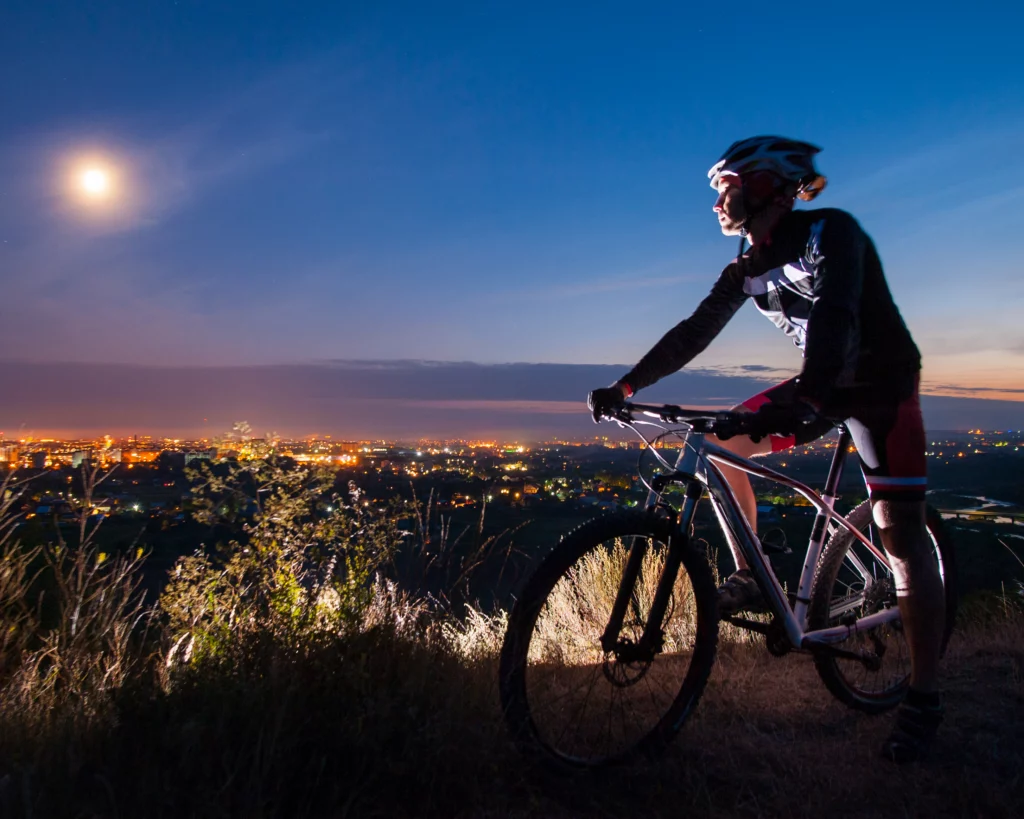
In low light and rain, drivers see less and react later, and a cyclist is a small, easily-missed shape against a busy background of headlights, shop signs and wet tarmac. Dusk is deceptively dangerous, it still feels bright enough to you, but your eyes have adjusted to the fading light while an approaching driver’s may not have, and you can slip into the gloom without realising it. Wet roads make it worse, cutting contrast and throwing glare that hides you further. The answer is to be seen from every direction that matters: from the front, from behind, and, the part most people forget, from the side, at junctions, where an ordinary front-and-rear setup does almost nothing. It helps to think of autumn visibility as a full 360-degree job, not just a lamp clipped to the handlebars. And it isn’t only about the darkest hours: the grey, flat light of an overcast autumn afternoon flattens contrast and hides you almost as effectively as nightfall, which is why being seen is a whole-season habit rather than a strictly after-dark one.
Front and rear lights: what the numbers really mean
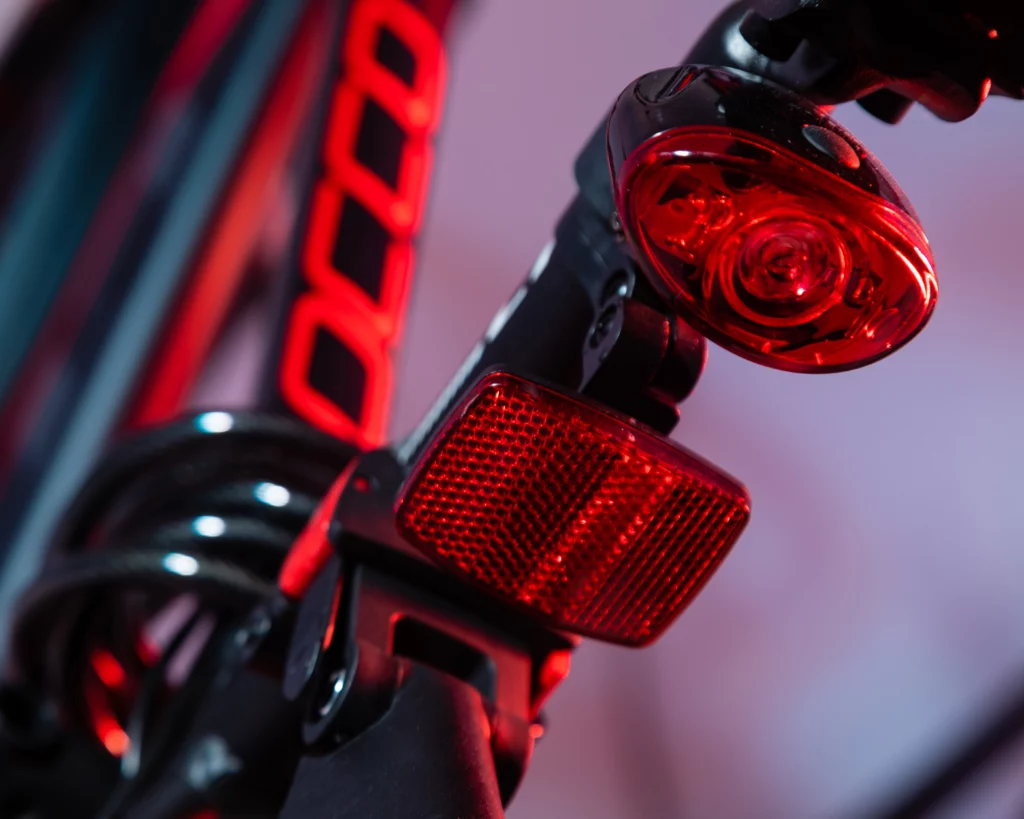
Every autumn setup starts with two lights: a white one at the front and a red one at the rear, switched on the moment the light starts to drop, not just once it’s fully dark. “Lumens” measure brightness, and more isn’t always the point: on lit city streets a modest output is plenty to be seen, while unlit lanes need something stronger to actually light the road ahead of you. Most lights offer both steady and flashing modes; a flashing rear light grabs attention in traffic, while a steady front light helps drivers judge your distance and speed rather than guessing. Before you buy, look at the run-time on the mode you’ll really use, whether it recharges by USB or takes batteries, and how securely it mounts and comes off for charging. A dependable pair of front and rear lights is the foundation everything else builds on, and in many countries a white front and red rear light are legally required after dark, so it’s worth checking the rules where you ride. It also pays to aim the front light slightly downward so it lights the road without dazzling oncoming traffic or fellow cyclists, and to run a light even on grey autumn afternoons, daytime running modes are increasingly common precisely because they help drivers pick you out long before dusk.
Building a be-seen setup: light sets vs single lights
The simplest way to cover both ends at once is a matched light set, a front and rear designed to pair, charge together and sit correctly on the bike, so you’re not mixing mounts and cables from different products. Bottari Europe’s bike light sets2 take the guesswork out of getting both halves right in one go. From there you can layer on extras that genuinely add safety: a helmet light lifts a beam up to roughly driver eye-level and points wherever you turn your head, a small second rear light adds redundancy for the evening one of them runs flat, and wheel or frame lights give you side-on presence that front-and-rear lamps can’t. You don’t need every one of these, but a good set plus a single backup light means a dead battery is never the reason you ride home unseen. Where you place the lights matters as much as owning them: keep the rear light unobstructed by a saddlebag or a flapping jacket, mount it upright rather than angled down at the road, and clip the front where its beam clears your hands, bag and front wheel.
Reflective gear that actually works
Lights make you visible when they’re pointed the right way; reflectives quietly fill in everything else. A reflective harness or band bounces a driver’s own headlights straight back at them from angles your lights simply don’t cover, most importantly from the side, at the junctions and roundabouts where a large share of collisions happen. Movement helps as well: reflective ankle bands catch the eye particularly well because the steady up-and-down of pedalling reads instantly, even at a glance, as a person on a bike. A Bottari Europe reflective harness worn over whatever jacket you’ve got on keeps you visible regardless of what you’re wearing that day, so you’re not relying on having remembered your bright coat. The rule of thumb is to put reflective material where it moves and where it faces outward, not buried under a rucksack or a flapping jacket hem. It’s also worth knowing the difference between hi-vis and reflective, because they do different jobs: bright fluorescent colours stand out in daylight and on grey afternoons, while reflective material only lights up once a headlight actually hits it after dark. Autumn asks for both, so a harness that is fluorescent and reflective at once has you covered across the whole day.
Mudguards, clean lenses and the small habits that keep you visible
Autumn’s wet roads work against your visibility in a sneaky way: spray thrown up off the tarmac coats your rear light and reflectors in a grey film that dims them without you noticing, and a soaked, mud-streaked rider is a cold, distracted and less predictable one. A set of Bottari Europe mudguards4 keeps that spray off both you and the bike, so you arrive drier, warmer and riding more steadily, and your light lenses and reflectors stay cleaner for longer. On top of that, build two ten-second habits into your routine: wipe your front and rear lenses and reflectors before you set off, and keep your lights topped up so you’re never tempted to head out on a battery that’s nearly gone. Clean, charged and covered beats bright-but-filthy on every single ride.
A quick pre-ride visibility check
Before you roll out, run a thirty-second check so nothing catches you out mid-ride. Front light on and bright; rear light on; both with enough charge for the trip home as well as the trip there; reflective harness or bands on and facing outward; lenses and reflectors wiped clean; and a bell5 within easy reach for the moments when being heard matters as much as being seen. It feels fussy the first few times and then becomes completely automatic, the same muscle memory as patting your pocket for your keys. A ride that starts with a setup you’ve actually checked is a ride you don’t have to think about again once you’re moving.
Riding position and route choices for low light
Visibility isn’t only about the gear you bolt on, how and where you ride matters just as much once the light is poor. Ride predictably and hold a confident, consistent line rather than weaving along the very edge of the road, so drivers can place you clearly and pass with room to spare. Assume you haven’t been seen until you’re sure that you have, take extra care at junctions and roundabouts where most collisions with cyclists occur, and try to catch a driver’s eye before you commit to a move. And when you have the choice, pick well-lit roads and paths over the dark short-cut, even if it adds a few minutes to the journey, in autumn, the brighter route is very often the safer one. Watch the everyday hazards autumn makes worse, too: give parked cars a wide berth so a suddenly-opened door can’t catch you, hang back where you can be seen rather than tucking into a driver’s blind spot at a queue, and ease off over wet leaves and painted road markings, which turn slippery the moment the rain arrives.
Ride into the darker months with confidence
None of this is about gearing up like a night rider heading off on an expedition, it’s a handful of cheap, one-time additions that quietly keep you safe every single evening. Build the system once and let it do its job: a reliable front and rear light, a matched set you can trust, reflectives that face outward, mudguards to keep it all clean, and the small habits that hold it together. Do that, and shorter days stop being a reason to get off the bike at all. Explore Bottari Europe’s bike lighting sets and reflective gear to set yourself up for safe, confident riding right through the darker months.

 Spain
 Portugal
 Poland
 Romania
 Hungary
 Baltic