
There’s a particular kind of winter morning everyone dreads: you’re already running late, you turn the key, and the car responds with a slow, straining groan, or nothing at all. A flat battery is the single most common cause of winter breakdowns, and it almost always strikes on the coldest, most inconvenient day. The good news is that it’s also one of the most predictable and preventable problems your car will throw at you. Understand why the cold hits batteries so hard, learn to read the warning signs, and keep one or two simple things in the boot, and a dead-battery morning becomes a five-minute fix instead of a ruined day. Here’s how it works and how to stay ahead of it. None of it requires any mechanical skill, just a little understanding and a couple of cheap items kept somewhere you can reach them.
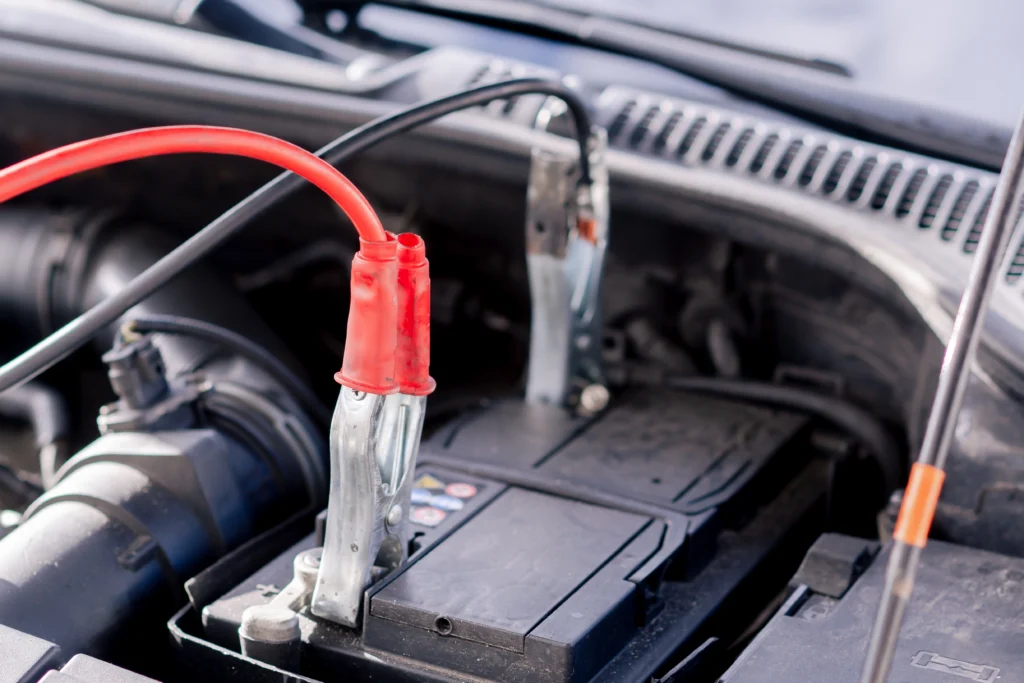
Why the cold drains your battery
Cold weather attacks your battery from two directions at once. First, the chemical reaction inside a battery that produces electrical current slows right down as the temperature drops, so a battery that delivers full power in summer can lose a significant share of its available cranking power on a freezing morning. Second, the engine is harder to turn over when it’s cold, because the oil is thicker and everything is stiffer, so just as the battery has less to give, the car is asking it for more. On top of that, winter is when you lean hardest on the electrics: headlights, heated screens, blowers, wipers and seat heaters all draw power, and short winter journeys often don’t give the alternator long enough to fully recharge what starting the car used up. A battery that was quietly weakening through autumn finally gives out when all of this lands at once. In other words, a winter no-start is rarely one single fault; it’s the cold quietly tightening the screws on a battery that no longer had much margin to spare.
The warning signs before it dies
A battery rarely dies without warning, it usually drops hints for days or weeks first, if you know what to listen for. The classic one is sluggish cranking: the engine turns over more slowly than usual, with a laboured sound, especially first thing in the morning. You might notice the headlights looking dimmer at idle and brightening when you rev, interior lights that fade, or electrical gadgets and the stereo behaving oddly. A battery warning light on the dashboard, repeated need to try the key twice, or a car that starts fine when warm but struggles from cold are all red flags. Age matters too: most car batteries last somewhere around four to five years, so if yours is older than that and showing any of these signs, treat it as living on borrowed time. Catching the pattern early lets you act on your terms rather than being stranded on the battery’s. It’s worth a quick listen on the first genuinely cold morning of the year, because that’s exactly when a marginal battery is most likely to show its hand. Watch out, too, after the car has sat unused over a cold snap or the holidays, because a battery that was fine before a long rest can be surprisingly flat afterwards.
Maintaining charge with a smart battery charger
If your car sits unused for days at a time, or only does short hops that never fully recharge it, a smart battery charger is the simplest way to keep the battery healthy through winter. Unlike an old-fashioned charger, a modern smart battery charger monitors the battery and adjusts automatically, topping it up and then holding it at the right level without overcharging, so you can safely leave it connected. It’s ideal for a second car, a weekend car, or any vehicle that does a lot of standing in the cold. Giving a tired battery a proper full charge overnight once in a while also does far more good than a string of short drives ever will. For many drivers, a charger is the difference between a battery that limps to spring and one that starts first time every morning. Many chargers also have a recovery or reconditioning mode that can revive a deeply discharged battery an ordinary charger would simply refuse to touch.
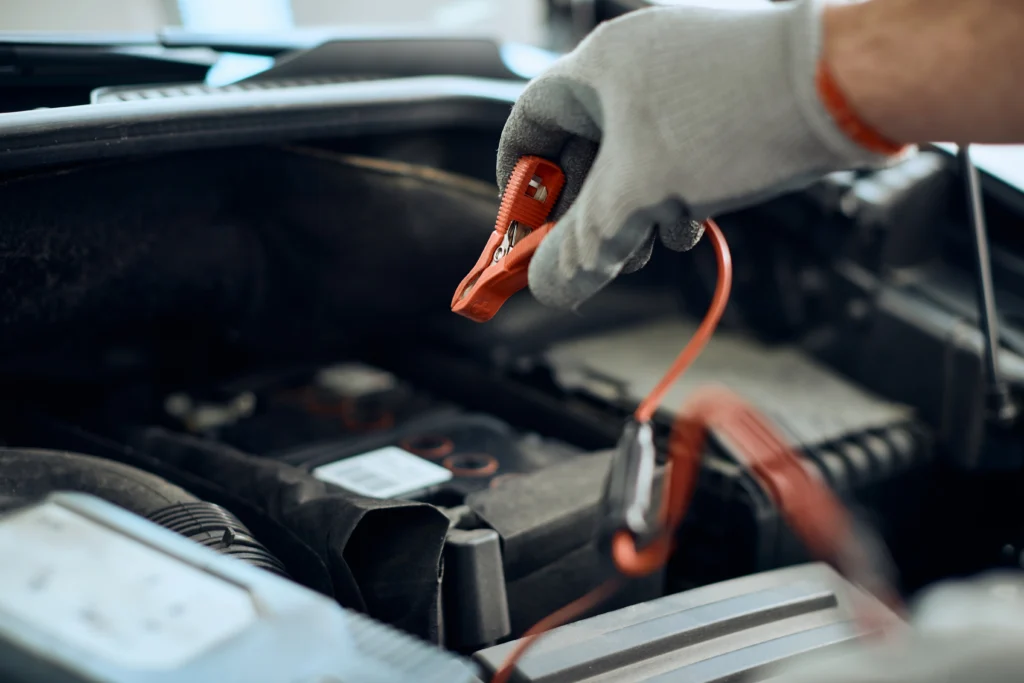
How to safely jump-start a car (step by step)
If you are caught out, jump-starting is straightforward as long as you do it in the right order. With booster cables and a second car: make sure both cars are off and not touching. Connect the red clamp to the positive terminal of the flat battery, the other red clamp to the positive terminal of the good battery, the black clamp to the negative terminal of the good battery, and the final black clamp to an unpainted metal point on the flat car’s engine block, not the flat battery’s negative terminal. Start the working car, let it run for a minute or two, then start the flat one. Once it’s running, remove the clamps in reverse order, and then drive for a good while or put the battery on a charger to recover the charge. With a portable jump starter the process is simpler still: you don’t need a second car at all, just the pack’s own clamps and its clear on-device instructions. Keep the pack somewhere it won’t be forgotten and top it up every month or two, because a rescue battery that has itself gone flat is no help at all.
Jump starter vs booster cables: which and when
Both get you going again, but they suit different situations. Traditional booster cables are cheap, compact and reliable, and a sensible thing to carry, but they only work if there’s another car nearby, a willing driver, and enough room to park the two nose to nose, which isn’t guaranteed on a quiet street or in a packed car park. A portable jump starter removes all of that: it’s a self-contained battery pack that starts your car entirely on its own, no second vehicle required, and most double as a USB power bank and a torch, which earns the space it takes up. The honest answer for most people is to keep a jump starter in the boot as the primary rescue and a set of booster cables as a cheap backup, and so you can help out someone else who’s stuck, too. Whichever you choose, get it out and read the instructions once before you ever need it, so the first time you use it isn’t in the dark and cold with a queue building behind you.
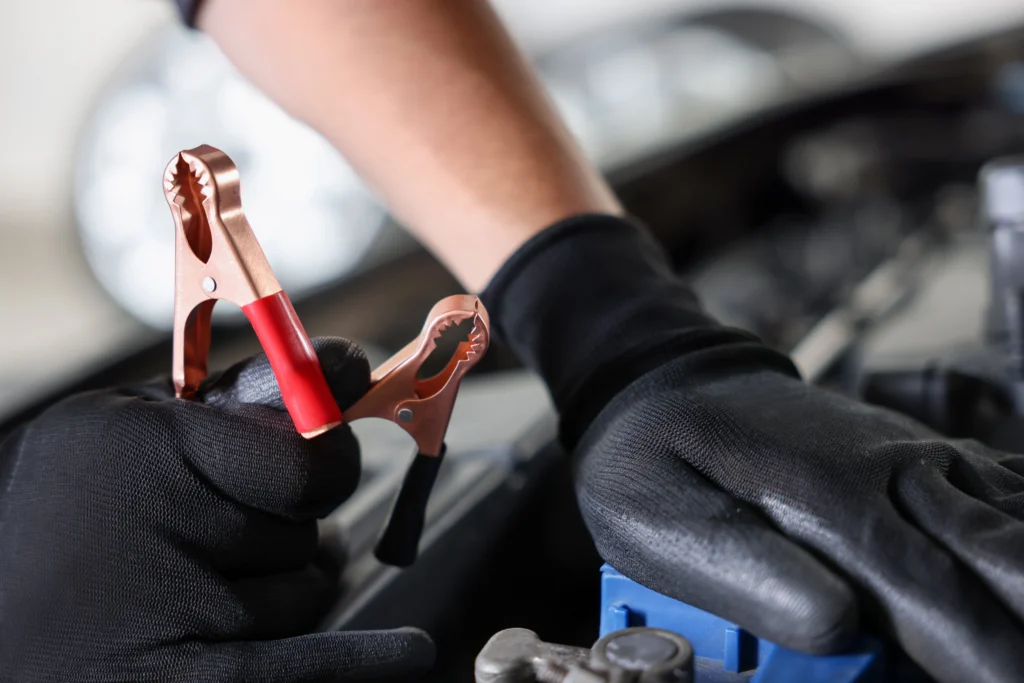
Battery terminals and clean connections
Not every no-start is the battery itself, sometimes it’s the connection. Over time the battery terminals can build up a crusty white, green or bluish powder, which is corrosion, and that layer gets between the battery and the cables and chokes off the current. If you spot it, it’s worth cleaning: with the engine off, disconnect the terminals (negative first), clean away the deposits with a wire brush and refit everything tightly, positive first on the way back. Loose clamps cause the same intermittent, baffling faults, a car that starts one day and not the next, so make sure the connections are snug. A smear of protective grease on the terminals helps keep corrosion from coming straight back. It’s a five-minute job that occasionally saves the price and bother of replacing a battery that was never actually the problem. If you’re not comfortable disconnecting terminals yourself, any garage will check and clean them in a couple of minutes.
When it’s time for a new battery
Sometimes a battery is simply finished, and no amount of charging or jump-starting will give it a reliable life again. If yours is more than four or five years old, needs jump-starting more than once, holds charge poorly even after a proper top-up, or has physically swollen or leaked, it’s time to replace it rather than keep nursing it through. Have it tested if you’re unsure, many parts shops do this for free, and get the correct type and size for your car, which the handbook or a fitment lookup will confirm. Autumn and early winter are the smart time to replace a borderline battery, on a mild day of your choosing, rather than waiting for it to fail you on the coldest morning of the year. A fresh, correctly specified battery is one of the most reassuring winter upgrades there is. Fitting it is often a simple job, but note any radio codes or settings your car may need re-entering afterwards, and recycle the old battery properly rather than binning it.
Start every cold morning with confidence
A flat battery feels like bad luck, but it’s usually the predictable end of a slow decline you could have seen coming. Know why the cold is so hard on batteries, watch for the warning signs, keep the charge topped up, and carry the means to rescue yourself if you’re ever caught out. Do that, and the dreaded groan-of-nothing turns into a minor, manageable moment rather than a morning-ruining one. Keep your car ready to start all winter with a Bottari Europe battery charger or jump starter, and turn the key each morning knowing it’ll answer.

 Spain
 Portugal
 Poland
 Romania
 Hungary
 Baltic